
By Sonia Singh, certified face yoga instructor
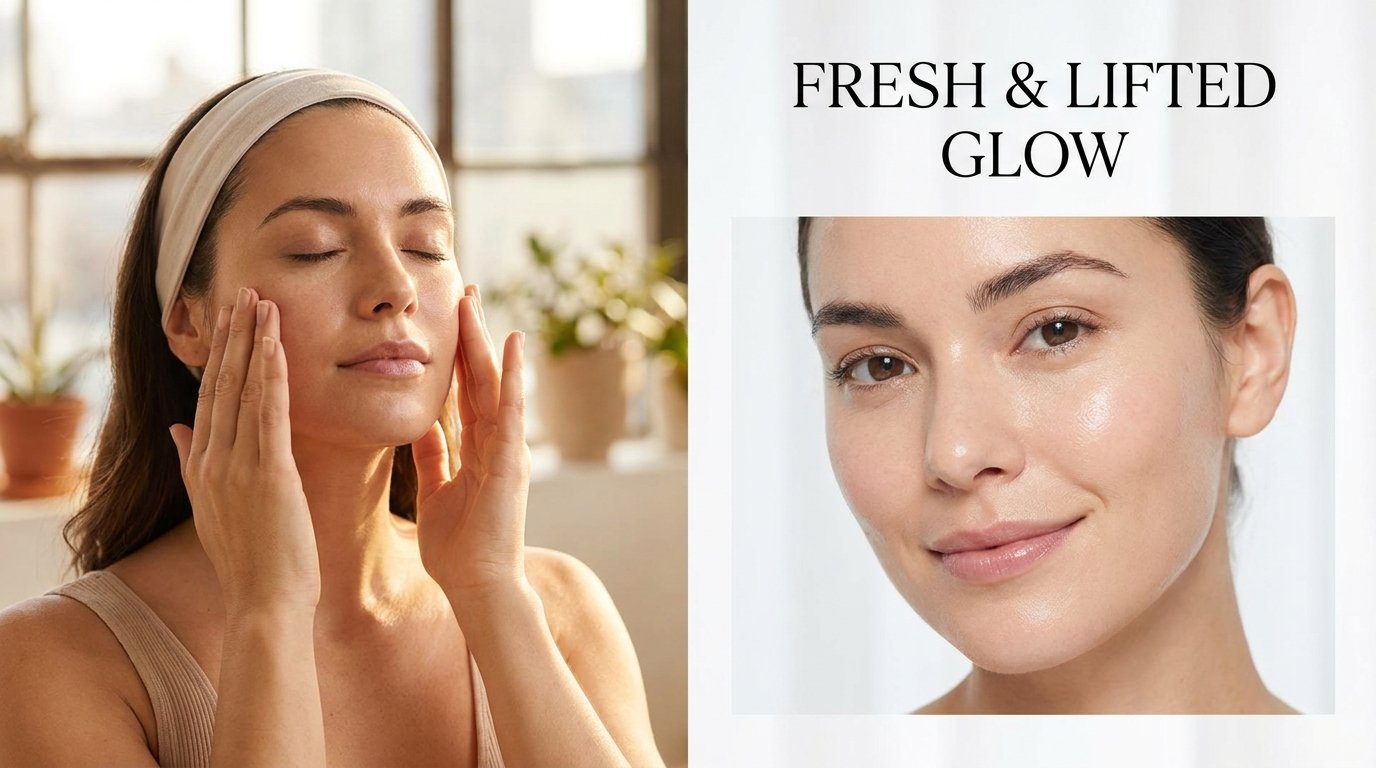
Search “face yoga before and after” and you’ll find endless dramatic photos. Some are genuine. Some are helped along by better lighting, a lifted chin, and a bit of makeup in the “after.” That mix makes it hard to know what to actually expect.
So rather than add another gallery, this guide does something more useful: it tells you what realistic results look like, how long they take, what changes them, and how to track your own honestly. If you’re deciding whether face yoga is worth your time, this is the straight version.
Do the before-and-after photos mean anything?
Some do, some don’t. A fair comparison uses the same lighting, angle, time of day and expression in both shots. Change any of those and you can manufacture a “result” that isn’t real. That’s worth knowing before you judge yourself against a stranger’s photo online.
There is real evidence underneath the hype, though. The often-cited 2018 study in JAMA Dermatology had women aged 40 to 65 do facial exercises for 20 weeks. Comparing before-and-after photos, researchers found fuller upper and lower cheeks and judged the women to look younger. It’s one small study and the wider research is still limited, but it lines up with what I see in practice: gradual, believable improvement, not a face transplant.
A realistic results timeline
Here’s roughly what to expect if you practise most days. Everyone’s different, so treat these as a guide, not a promise.
First 1–2 weeks: You’ll mostly feel it rather than see it. Less tension in the jaw and forehead, a bit more awareness of where you hold stress. Some people notice reduced puffiness and a brighter look from the improved circulation.
4–8 weeks: This is where visible changes usually begin. Slightly firmer tone, a fresher look, sometimes a softening of fine lines from tension release. Subtle, but real, and often the point where friends say you look “well-rested.”
3–6 months: With consistency, the muscle tone changes become clearer. Firmer cheeks, a more defined jawline, better overall tone. This matches the timeframe in the research.
6 months and beyond: Face yoga becomes maintenance. You’re holding onto gains and slowing changes, the same way ongoing exercise maintains the rest of the body.
What affects your results
Two people doing the same routine can get different results. The main factors:
- Consistency. By far the biggest one. A little most days beats a lot once a week.
- Starting point. Where you begin (age, muscle tone, skin condition) shapes how much visible change there is.
- Age. Younger faces often respond faster, but every age benefits.
- Lifestyle. Sleep, hydration, diet, sun protection and stress all show up in your skin and either support or undo the work.
- Technique. Doing the moves correctly, without creasing the skin, matters more than doing lots of them.
How to take honest before-and-after photos
If you want to see your own progress properly, take comparison photos you can actually trust:
- Same light. Natural daylight, facing a window, no harsh overhead lighting. Use the same spot each time.
- Same time of day. Morning faces and evening faces look different. Pick one.
- Same angle and distance. Camera at eye level, same distance. Prop your phone so it’s identical each time.
- No makeup, neutral expression. Relaxed face, no smiling or posing in either shot.
- Same intervals. Take one now, then every four weeks. Don’t check daily; change is too slow to see day to day and you’ll only discourage yourself.
Store them side by side. Most people are surprised at the eight-to-twelve-week comparison because the change is too gradual to notice in the mirror.
What face yoga can and can’t do
Being honest about this saves disappointment. Face yoga can tone the muscles under the skin, improve circulation, release tension, and help your face look firmer, fresher and more lifted over time. It supports your skin’s overall health and it’s calming to do.
What it can’t do is act like surgery or injectables. It won’t erase deep folds overnight or reverse significant sagging on its own. If that’s your goal, a dermatologist or cosmetic professional is the right conversation, and face yoga can still complement whatever you choose.
Real results from real sessions
[Sonia’s own client before-and-after photos will be added here as they become available, with written consent, same lighting, angle and time of day, plus each client’s timeframe. Real local results will be this page’s strongest asset.]
Frequently asked questions
How long before I see before-and-after results?
Most people feel a difference within a couple of weeks and start to see subtle changes around four to eight weeks, with clearer results by three to six months of near-daily practice.
Does face yoga really work?
The evidence is limited but positive, with the best-known study showing fuller cheeks and a younger-looking result over 20 weeks. Expect gradual improvement, not a dramatic overnight change.
Are before-and-after face yoga photos real?
Some are genuine; others are flattered by lighting, angle and makeup. A fair comparison keeps all of those identical between the two shots.
How do I photograph my own progress?
Same light, same time of day, same angle, no makeup, neutral expression, once every four weeks.
Ready to start your own before-and-after?
The best “before” photo is the one you take today. In a one-on-one online session I’ll assess your face, set realistic goals for your starting point, and build you a routine to track over the coming weeks. Online, Australia-wide.
This article is for general information and isn’t medical advice. Results vary from person to person.